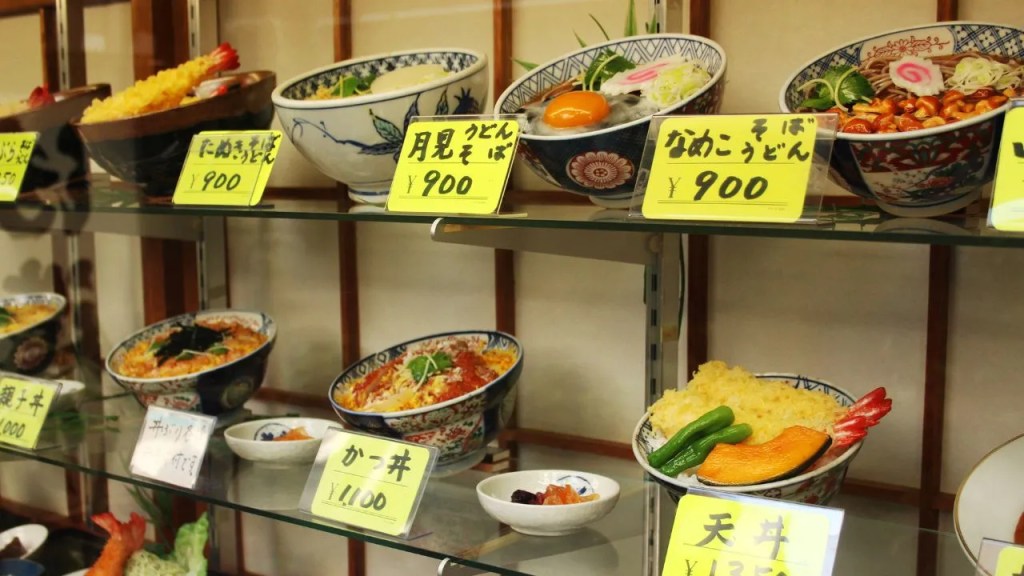
The artificial display foods known as shokuhin sampuru that fill restaurant windows across Japan represent a fascinating innovation with nearly a century of history, showing how a uniquely Japanese craft evolved into an entire industry and pioneered a revolutionary form of visual communication.
Sampuru first originated in the 1920s, when rapid modernization in Japan drew masses of rural workers into the cities, creating a new class of urban diners who found themselves bewildered by restaurant culture itself. Department stores began opening cafeterias to serve these new city workers, many from farming backgrounds who struggled not only with traditional city dishes they’d never encountered, but also with exotic Western imports like spaghetti and hamburgers that were becoming fashionable among the urban elite populations. After the devastating 1923 Great Kanto earthquake, Tokyo’s Shirokiya department store emerged as a pioneer in solving this communication problem. Shirokiya had opened the first restaurant in a Japanese department store in 1911 and was among the first establishments to reopen after the disaster, serving masses of people who could no longer cook at home. Rather than displaying real food that would attract insects and deteriorate throughout the day, Shirokiya introduced the first food replicas in their dining hall – a revolutionary approach that combined visual marketing with commercial efficiency.
 The Village Market
Leave a comment