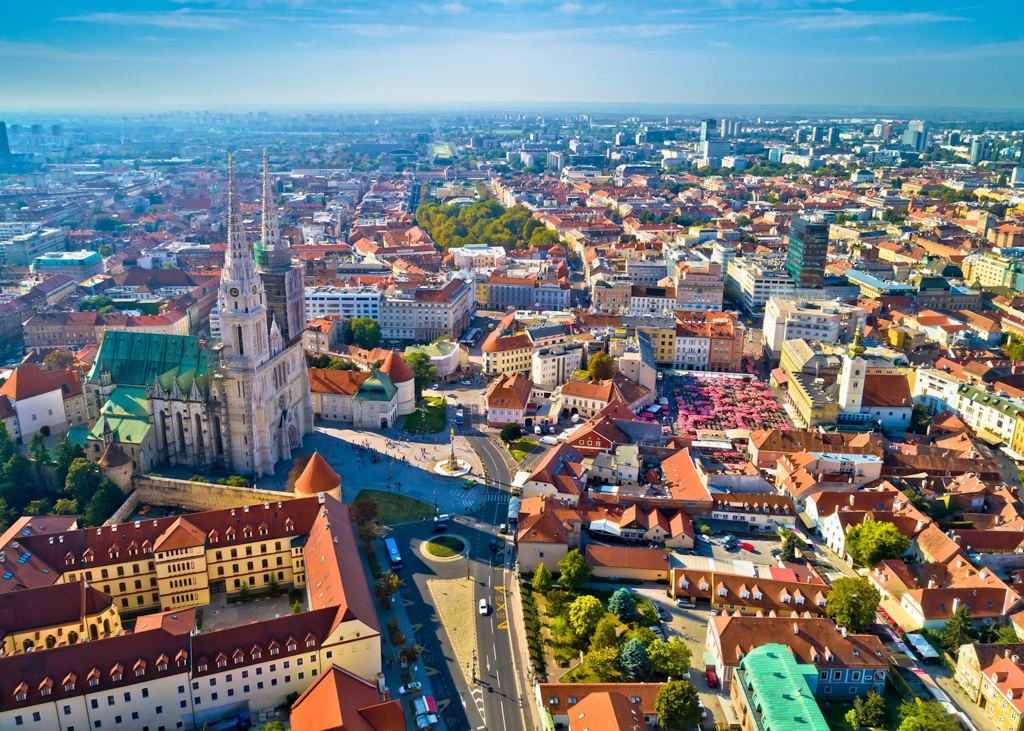
I’ve spent a lot of time in Croatia these last ten years visiting my now 95 year-old mother. Since I always identified strongly with my heritage I thought I would instantly fit in. Of course that didn’t happen. I’ve lived in the United States for the majority of my life and while I have a basic understanding of the Croatian language and customs, I quickly realized my grasp of the culture was based solely on idealized memories from my childhood and a nostalgia for the past. My version of the culture was frozen in place and time. And, while some of the old ways remained, Croatia had moved on to become a more westernized version of itself.
This got me to thinking about cultural heritage. What is it actually?
UNESCO describes cultural heritage as “our legacy from the past, what we live with today, and what we pass on to future generations. Our cultural and natural heritage are both irreplaceable sources of life and inspiration.” The Department of History of Art and Architecture at Harvard builds on UNESCO’s definition through research you can find here. Harvard provides the following definition of cultural heritage.
Heritage can come in many forms—definitionally, it is a generational inheritance, one which may be either tangible or intangible. Intangible forms of heritage include oral traditions, community bonds, and language. Tangible forms of heritage are what we will explore on this page—material traces left behind which transmit important cultural and historical knowledge from one generation to the next.
In this way, tangible cultural heritage can be understood as monuments, town sites, archeological sites, and works of art which carry and transmit the cultural features of a society—the spiritual, material, intellectual, and emotional features of that society or group.
 The Village Market
Leave a comment